

Your Brand Is the Operating System of Your Business: A Cross-Functional Playbook for Leaders
Brand runs deeper than the team that manages it.
There’s a version of brand management that settles into most organisations naturally — marketing owns the brand. They build the guidelines, run the campaigns, manage how the brand looks and sounds. Everyone else — finance, product, HR, sales, operations — runs the business. The two tracks move in parallel, occasionally intersecting, rarely truly integrated.
The marketing team communicates the brand. Everyone else builds it — through the decisions they make, the standards they hold, and the ones they let slide. The gap between those two tracks is where brand coherence quietly erodes.
The brand is not owned by one function — it is expressed by all of them.
Every function is already making Brand Decisions
A hiring decision is a brand decision. It determines what kind of people the organisation attracts, what culture gets reinforced, what values get lived rather than listed. A pricing decision is a brand decision — it signals where the brand sits, what it believes it’s worth, who it’s really for. A product decision, an operations standard, a capital allocation call — each one either deepens the brand’s positioning or gradually pulls away from it.
Most of these decisions get made without any reference to the brand. Not because the people making them don’t care, but because nobody built the connection between the brand strategy and the operational logic. The brand exists in one place; the business runs in another.
The EPIC Brand Map™ was built to close that distance. As a strategic compass, it gives every function a shared reference — not a set of constraints, but a logic that makes decisions easier to make well. When the brand’s positioning, promise, and values are clearly mapped and genuinely understood across the organisation, each function has something to orient around that goes beyond its own objectives.
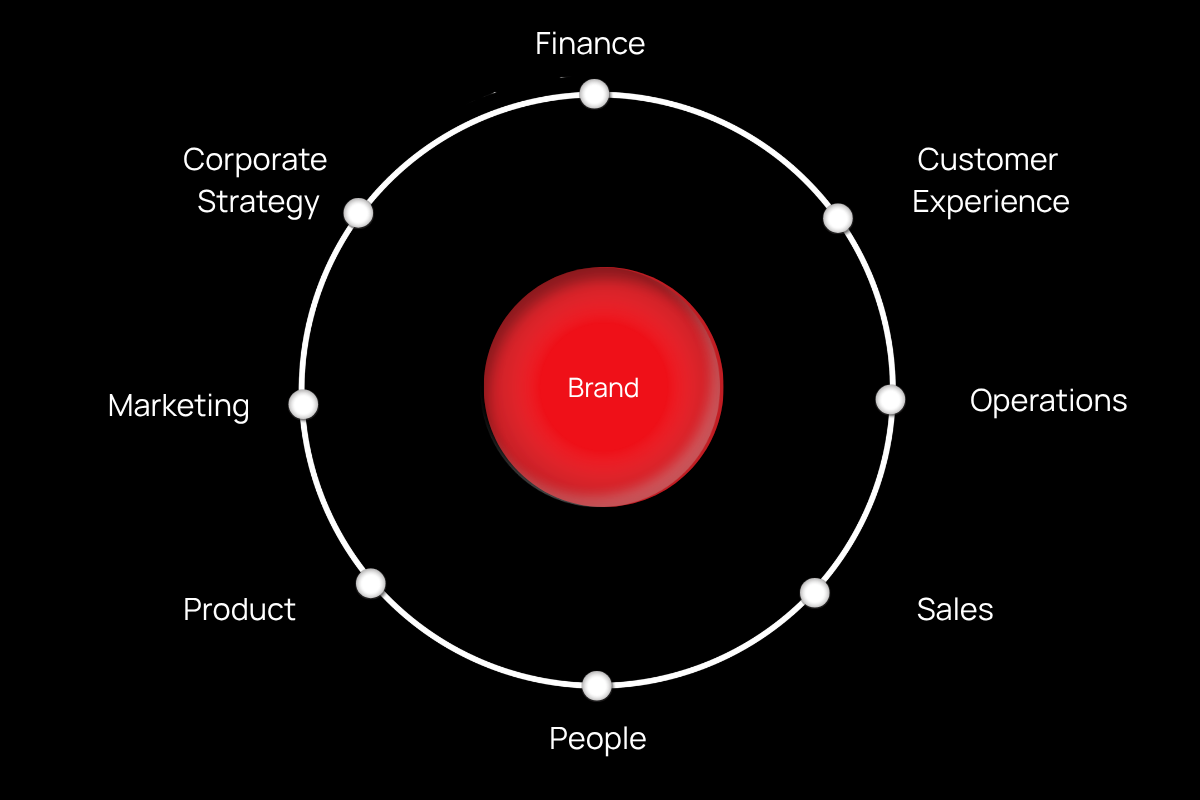
What this looks like across the Business
Finance aligns capital allocation and budgeting with brand priorities — decisions that strengthen strategic positioning and build toward long-term value, not just immediate return.
Talent acquisition and culture programs are shaped by the brand’s value creators, so that who joins and how they work reinforces the brand from within.
Product evolves with the brand — new offerings and existing ones designed to deliver tangible value to the customer segments the brand has defined, anchored in strategic positioning rather than reactive to market pressure.
Sales becomes more credible when the story it tells is rooted in brand truth — driving more natural conversions and sustainable growth.
Operations builds the systems and workflows that consistently deliver the brand experience, holding the standards that protect it as non-negotiable.
And customer experience is designed to reflect the brand’s essence at every touchpoint — deepening satisfaction, earning repeat business, and building retention that compounds over time.
Marketing, in this model, does what it does best — elevating brand perception and driving acquisition through storytelling that is rooted in what the business actually is.
This is what Brand = Business means in practice. The EPIC Brand Map™ doesn’t ask any single function to carry the brand. It ensures that every function, regardless of its objectives, is oriented around the same strategic core.
Why coherence compounds
When brand runs through the whole business intentionally, the effects accumulate in ways that are difficult to attribute to any single decision but unmistakable in the aggregate. The customer experience becomes consistent across touchpoints. The employee experience becomes intentional rather than accidental. The market position becomes something the whole organisation is building toward, together.
The EPIC Brand Map™ makes this possible because it gives the brand a structured home that every function can access and act from — across all 19 elements, from positioning at the pinnacle to brand experience at the base. The Map doesn’t ask marketing to do more. It asks the whole organisation to do what it’s already doing, with the brand as the compass.
Going Deeper
This article reflects a body of work developed through long‑term application in real world that impacted 1,000+ brands and businesses worldwide.
If you’re early in your brand journey or looking to formalise your understanding, the Building Epic Brands course provides a practical introduction to strategic brand management and the EPIC Brand Map.
If you’re shaping decisions at a broader level, Building Epic Brands the book offers a deeper, more expansive treatment of the framework — written for leaders, founders, and experienced brand practitioners.